
World No Tobacco Day 2026: From Nicotine Dependency to Inner Freedom Through the Rajayogi Lifestyle
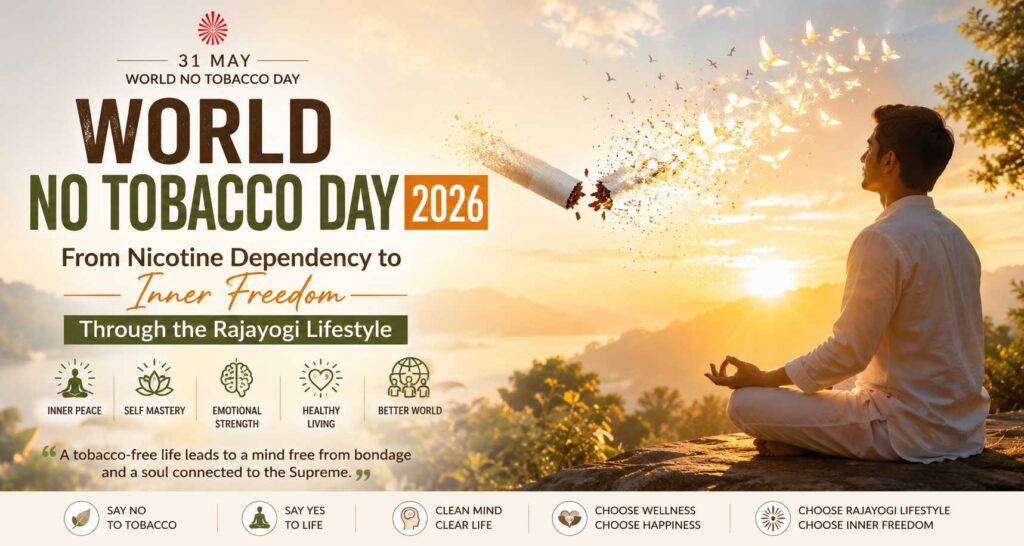
Every year on May 31st, the global community comes together to address one of the greatest public health challenges of modern times. For World No Tobacco Day 2026, the World Health Organization (WHO) has chosen the important theme: “Unmasking the Appeal – Countering Nicotine and Tobacco Addiction.”
This year’s campaign highlights how the tobacco and nicotine industry increasingly presents addictive products in modern, socially appealing forms — especially targeting younger populations. From aggressive digital marketing and influencer culture to products such as e-cigarettes, flavored nicotine pouches, synthetic nicotine, and chemical analogues, addiction is often packaged as lifestyle and innovation.
While governments and health systems continue strengthening regulations and awareness campaigns, an equally important question remains:
How do individuals become internally strong enough to permanently overcome addiction?
From the perspective of the Brahma Kumaris, freedom from tobacco is not achieved merely through suppression, fear, or temporary abstinence. Real transformation happens when an individual adopts a spiritually elevated and emotionally empowered way of life — a true Rajayogi lifestyle.
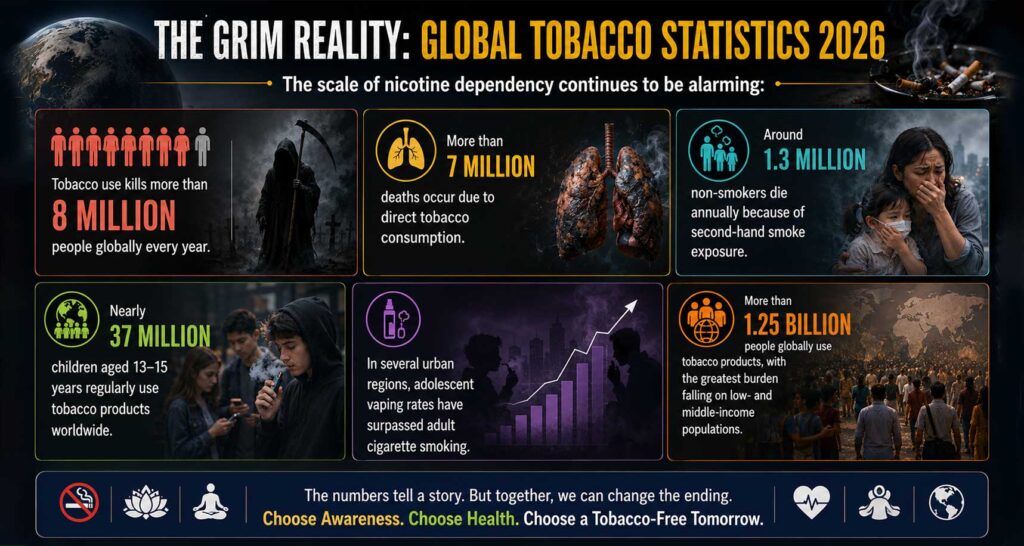
The Grim Reality: Global Tobacco Statistics 2026
The scale of nicotine dependency continues to be alarming:
- Tobacco use kills more than 8 million people globally every year.
- More than 7 million deaths occur due to direct tobacco consumption.
- Around 1.3 million non-smokers die annually because of second-hand smoke exposure.
- Nearly 37 million children aged 13–15 years regularly use tobacco products worldwide.
- In several urban regions, adolescent vaping rates have surpassed adult cigarette smoking.
- More than 1.25 billion people globally use tobacco products, with the greatest burden falling on low- and middle-income populations.
Beyond disease and mortality, tobacco dependency creates enormous emotional, social, and economic suffering for families and communities.
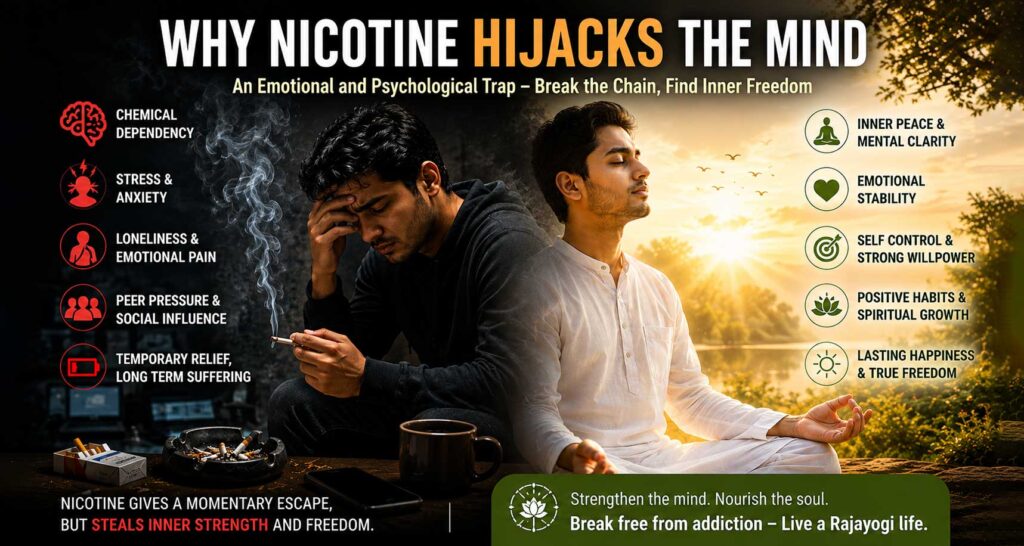
Why Nicotine Hijacks the Mind: The Emotional Dimension of Addiction
In the spiritual understanding of the Brahma Kumaris, substance abuse is ultimately an emotional depleter that masks deep-seated internal In spiritual understanding, addiction is not merely a chemical problem — it is also an emotional and psychological struggle.
Many individuals turn toward nicotine not only because of physical craving, but because of stress, emotional fatigue, anxiety, loneliness, peer pressure, or loss of inner stability. Nicotine creates a temporary sensation of relief, but gradually weakens emotional resilience and self-control.
As often explained in the spiritual teachings of the Brahma Kumaris:
“If we cannot give up a small habit because the mind becomes disturbed, how difficult it becomes to overcome major addictions without strengthening the inner self.”
Many smokers genuinely wish to quit. They know the medical dangers. Yet repeated relapses occur because the mind remains emotionally depleted while only the physical habit is being challenged.
The Rajayogi approach therefore shifts the focus:
Instead of fighting addiction alone, strengthen the inner self so deeply that dependency naturally weakens.
The Rajayogi Lifestyle: Replacing Dependency With Inner Fulfilment
Trying to force a person to give up addiction through fear or pressure rarely addresses the root cause.
If a child tightly holds a stone and someone forcefully snatches it away, the child cries. But if a diamond is placed in the child’s other hand, the stone is dropped naturally.
Similarly, the Rajayogi lifestyle does not merely ask individuals to “stop smoking.” It helps them discover a deeper experience of peace, self-respect, emotional stability, and spiritual fulfilment that gradually reduces the attraction toward addictive substances.
Baba teaches not merely “Rajayoga” as a practice, but “Yogi Jeevan” — a complete yogic way of living.
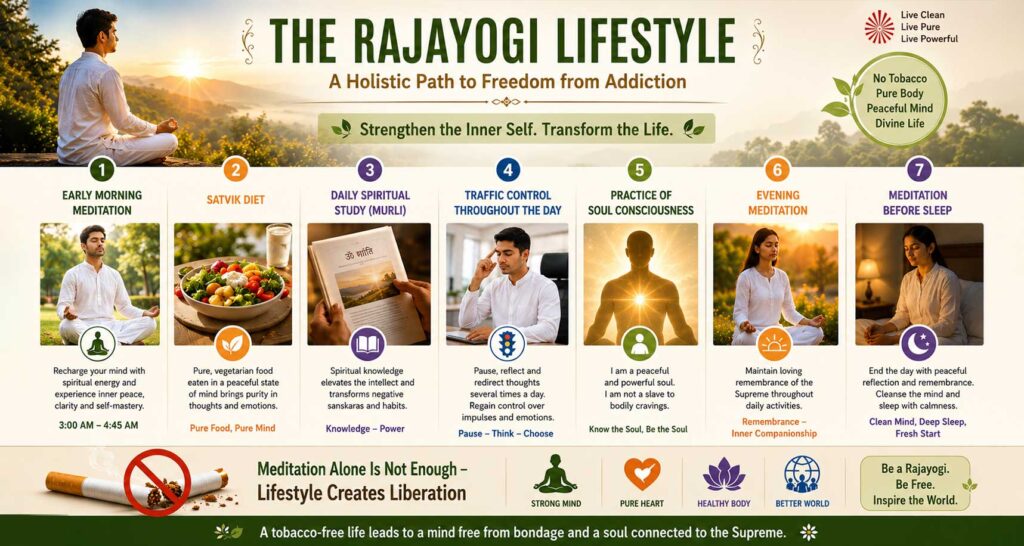
The Seven-Step Rajayogi Lifestyle for Freedom From Addiction
The Rajayogi lifestyle is not limited to meditation sessions alone. It is a holistic spiritual discipline that transforms thoughts, emotions, habits, relationships, and daily routines.
A practical Rajayogi lifestyle for overcoming addiction includes seven interconnected steps:
1. Early Morning Meditation
Waking up during the early morning hours (approximately 3:00 AM to 4:45 AM) and connecting with the Supreme Source of Peace helps recharge the mind with spiritual energy, emotional clarity, and self-mastery.
2. Satvik Diet
A pure vegetarian diet prepared and consumed in a peaceful state of mind positively influences emotional balance and mental stability. Purity in food gradually supports purity in thoughts and behavior.
3. Daily Spiritual Study (Murli)
Daily spiritual knowledge nourishes the intellect with elevated thoughts and gradually transforms old negative sanskars and self-destructive habits.
4. Traffic Control Throughout the Day
Pausing for a few minutes several times daily to consciously redirect thoughts helps individuals regain mastery over impulsive emotional reactions and addictive tendencies.
5. Practice of Soul Consciousness
Repeatedly reminding oneself: “I am a peaceful and powerful soul, not a slave to bodily cravings” gradually restores self-respect and weakens compulsive dependency patterns.
6. Evening Meditation
Maintaining loving remembrance of the Supreme throughout daily activities creates emotional stability, inner companionship, and freedom from loneliness-driven habits and impulses.
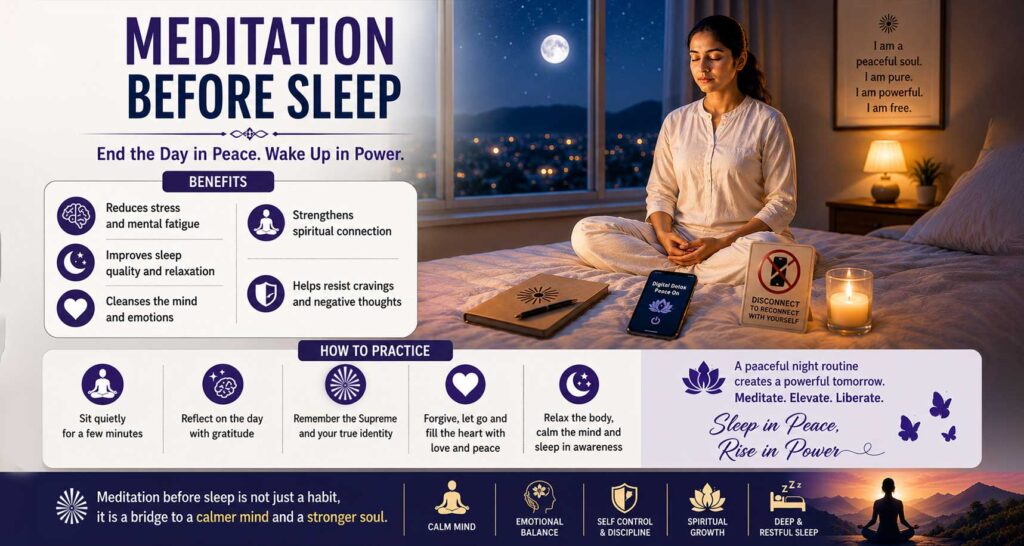
7. Meditation Before Sleep
Ending the day with peaceful reflection and remembrance before sleeping helps cleanse emotional burdens accumulated during the day and improves subconscious stability, reducing stress-triggered cravings.
Meditation Alone Is Not Enough — Lifestyle Creates Liberation
Modern society often treats meditation as a temporary stress-management tool. However, the Rajayogi understanding is much deeper.
It is not occasional meditation but a meditative lifestyle that creates lasting transformation.
It is not simply “doing yoga” for a few minutes, but living with:
- elevated thoughts,
- disciplined emotions,
- pure food,
- spiritual awareness,
- peaceful relationships,
- and constant remembrance of the Supreme
that gradually changes the inner chemistry of the mind.
When the lifestyle changes, cravings lose their intensity naturally.
Scientific Validation: Lifestyle Transformation and Addiction Recovery
Modern research increasingly supports the role of spiritual practices and meditative living in overcoming dependency behaviors.
A notable study conducted across 25 states and Union Territories in India evaluated 1,021 tobacco users consuming different forms of nicotine. The findings reported that a significant percentage of participants were able to quit tobacco successfully within one month of attending regular Rajayoga-based lifestyle education programs.
The study further suggested that participants experienced sustained behavioral improvement and reduced relapse tendencies because the change emerged from internal emotional and lifestyle transformation rather than external pressure alone.
Another thematic analysis published in the International Journal of Advance Research in Multidisciplinary observed that the Rajayogi lifestyle supports emotional self-regulation, improves psychological resilience, and helps individuals replace inner restlessness with a sense of spiritual fulfilment and self-worth.
Beyond Tobacco: Understanding Modern Addictions
Tobacco addiction is only one visible form of dependency in modern society.
Today, people also struggle with:
- digital addiction,
- excessive screen exposure,
- emotional dependency,
- anger,
- overstimulation,
- compulsive social media use,
- and unhealthy coping habits.
The Rajayogi lifestyle addresses the deeper psychological vacuum behind all forms of dependency by restoring inner peace, self-control, and emotional contentment.
When individuals become internally fulfilled, the need for external stimulation gradually decreases.
Protecting the Next Generation
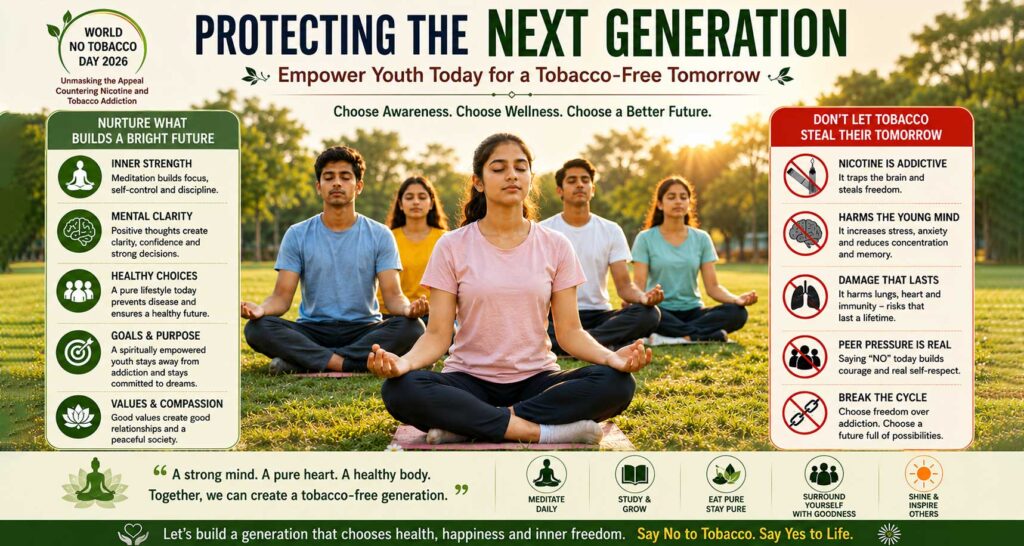
The theme of World No Tobacco Day 2026 emphasizes protecting children and youth from manipulative marketing and addictive trends.
Children absorb emotional behavior from their surroundings. If adults constantly handle stress through smoking, anger, screen dependency, or emotional instability, children unconsciously inherit similar coping mechanisms.
Therefore, anti-addiction campaigns must begin not only in institutions and policies, but also within homes.
When families cultivate:
- peaceful communication,
- emotional acceptance,
- spiritual values,
- disciplined media habits,
- and meditative living,
children grow with emotional security and greater resistance to peer pressure and harmful influences.
Your Practical Commitment for World No Tobacco Day
This World No Tobacco Day, try a 24-hour experiment in conscious living:
Establish a No-Anger Zone
Avoid anger, harsh words, and negative gossip for one full day. Emotional calmness reduces the subconscious urge to seek nicotine for temporary relief.
Audit Your Mental Content Diet
Reduce exposure to violent, toxic, or overstimulating digital media. Replace at least 15 minutes of negative content with spiritual reading or peaceful reflection.
Practice Soul Consciousness
Take a few moments during the day to remind yourself:
“I am a peaceful soul. Peace and purity are my original nature.”
Sleep in Peace
Before sleeping, disconnect from screens for a few minutes and sit in silent remembrance of the Supreme. Allow the mind to enter rest with gratitude and calmness.
Toward a Tobacco-Free and Spiritually Empowered Society
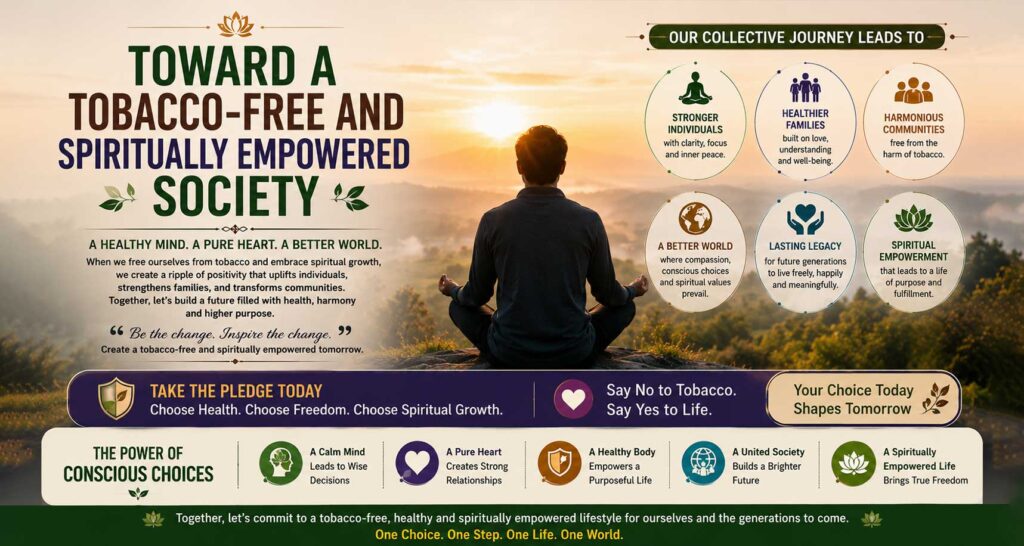
World No Tobacco Day should not remain merely a campaign against cigarettes or nicotine. It should become a movement toward emotional freedom, spiritual self-respect, and conscious living.
When individuals adopt a true Rajayogi lifestyle — rooted in soul consciousness, purity, elevated thoughts, disciplined living, and remembrance of the Supreme — addictions gradually lose their grip.
Real freedom is not suppression of desire, but awakening of inner fullness.
Let us unmask the illusion of temporary stimulation and rediscover the lasting power of inner peace.
Wishing the global family a healthy, conscious, and addiction-free World No Tobacco Day 2026.


