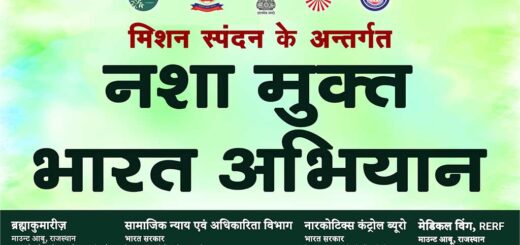
International Day Against Drug Abuse and Illicit Trafficking 2026
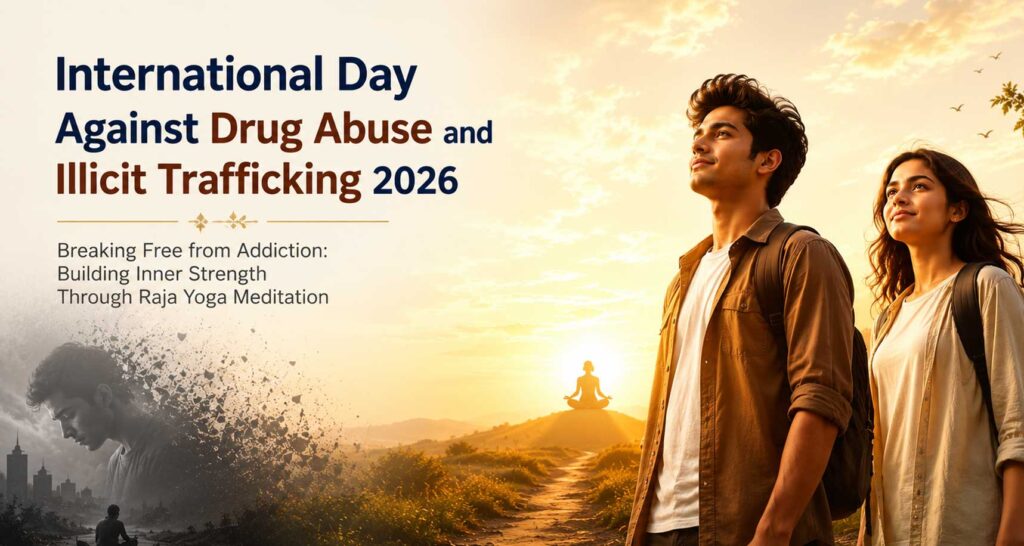




Breaking Free from Addiction: Building Inner Strength Through Raja Yoga Meditation
26 June 2026
Every year on 26 June, the world observes the International Day Against Drug Abuse and Illicit Trafficking, also known as World Drug Day, to raise awareness about the growing impact of substance abuse on individuals, families, communities, and nations.
Drug addiction is not merely a health issue. It is a social, emotional, psychological, and spiritual challenge affecting millions of people worldwide. It destroys physical health, weakens mental stability, damages relationships, increases crime, and robs young people of their future.
The United Nations established this day to strengthen global action and cooperation toward building a world free from drug abuse and illicit trafficking. The recent international campaign emphasizes prevention, awareness, recovery, and breaking the cycle of addiction through collective responsibility and compassionate action. (United Nations)
As the world searches for effective solutions, one important question remains:

How can individuals develop the inner strength required to overcome addiction permanently?
From the spiritual perspective of the Brahma Kumaris, lasting freedom from addiction begins not only with external treatment but with inner transformation.
Addiction is often the visible expression of a deeper inner struggle. Many individuals battling addiction are searching for relief from stress, loneliness, emotional pain, low self-esteem, or a sense of emptiness. Unless these underlying causes are addressed, recovery often remains incomplete.
Raja Yoga Meditation offers a holistic approach that strengthens the mind, heals the emotions, rebuilds self-respect, and awakens spiritual awareness. It helps individuals recognise their original identity as peaceful, pure, and powerful souls and reconnect with the Supreme Source of spiritual power.
When individuals experience their own inner worth and develop a loving connection with the Supreme Soul, they gradually discover the strength to overcome negative habits and create lasting positive change.
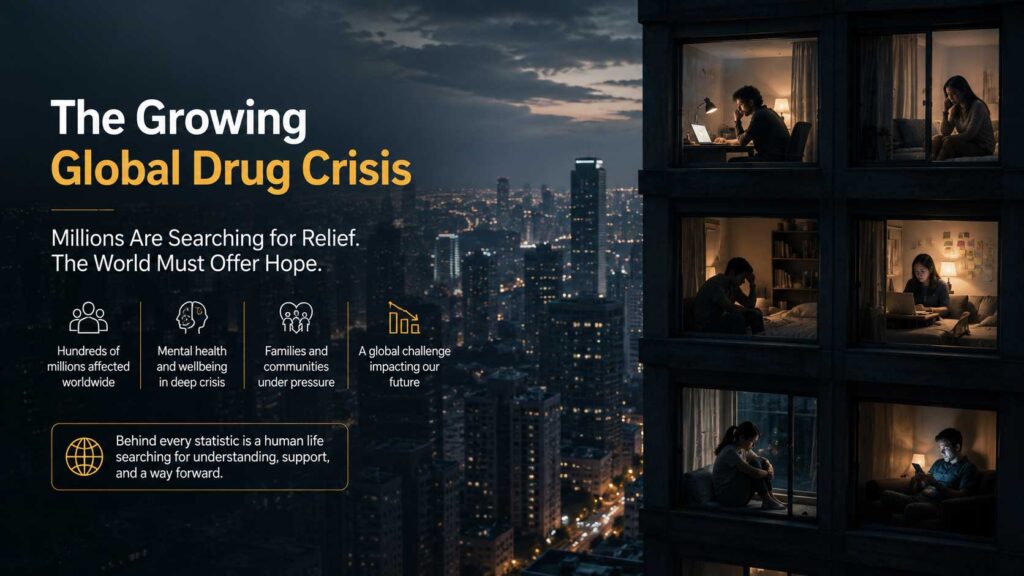
The Growing Global Drug Crisis
Drug abuse continues to be one of the most serious public health challenges facing humanity.
Today, addiction extends far beyond traditional narcotics and includes:
- Synthetic drugs
- Opioids
- Prescription drug misuse
- Alcohol dependency
- Cannabis abuse
- Nicotine addiction
- Digital addiction
- Behavioral addictions
According to international reports, millions of individuals around the world struggle with substance use disorders requiring treatment, rehabilitation, and emotional support. Drug abuse is increasingly affecting younger populations due to stress, loneliness, anxiety, peer pressure, social media influence, and emotional instability. (United Nations)
The consequences include:
- Physical illness
- Mental health disorders
- Family breakdown
- Academic decline
- Unemployment
- Crime and violence
- Social isolation
Behind every statistic is a human life seeking hope, healing, and support.
Global Drug Abuse Statistics
The global drug situation continues to pose serious challenges to public health and social stability.
Recent international reports indicate:
- Hundreds of millions of people worldwide use drugs annually.
- Millions suffer from drug use disorders requiring treatment and rehabilitation.
- Drug trafficking networks continue to fuel organized crime and violence across many regions.
- Synthetic drugs are emerging rapidly and creating new challenges for governments and healthcare systems.
- Young people remain among the most vulnerable groups due to emotional stress, peer influence, and easy access to addictive substances.
The United Nations continues to emphasize prevention, education, healthcare access, rehabilitation, and community resilience as key strategies for addressing the global drug problem. (unodc.org)
Drug Abuse in India: Current Statistics and Reality
India is also facing a significant challenge related to substance abuse and addiction.
According to the National Survey on Extent and Pattern of Substance Use in India, conducted by the Ministry of Social Justice and Empowerment in collaboration with AIIMS New Delhi:
Alcohol Use
- Nearly 16 crore Indians are current users of alcohol.
- A significant number require support for harmful or dependent alcohol use. (Press Information Bureau)
Cannabis Use
- Around 3.1 crore individuals use cannabis products such as ganja, charas, and bhang.
- More than 70 lakh people are estimated to suffer from cannabis-related problems. (Social Justice & Empowerment)
Opioid Use
- More than 2.3 crore people use opioids in various forms.
- Heroin remains one of the most commonly used opioid substances in India. (PMC)
Sedative and Prescription Drug Misuse
- Approximately 1.18 crore individuals use sedatives and prescription medicines for non-medical purposes. (Lippincott Journals)
Children and Adolescents
- Inhalant use among children and adolescents remains a major concern.
- Young people are increasingly vulnerable due to academic stress, social pressure, emotional challenges, and digital influence. (Lippincott Journals)
Emerging Challenges
Recent reports indicate increasing concerns regarding:
- Synthetic drug trafficking
- Pharmaceutical drug misuse
- Cross-border narcotics networks
- Organised crime related to illegal drug trade
- Rising substance abuse among youth populations (The Times of India)
These figures highlight that addiction is not confined to any particular region, class, or age group. It is a national challenge requiring collective action.
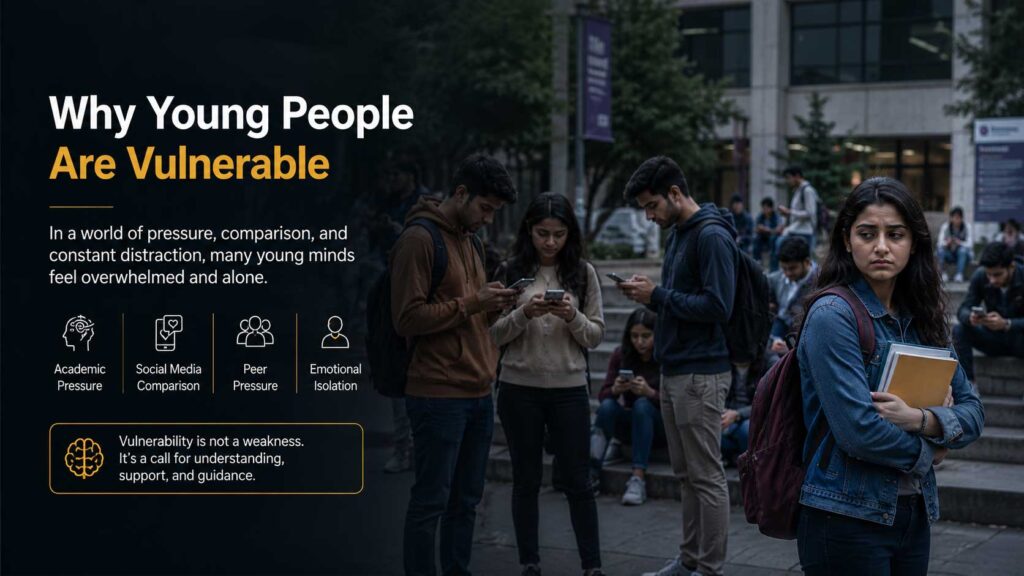
Why Young People Are Most Vulnerable
Young people today face unprecedented emotional and psychological pressures.
Many struggle with:
- Academic competition
- Social media comparison
- Relationship challenges
- Anxiety and depression
- Loneliness
- Identity confusion
- Lack of emotional support
When healthy coping mechanisms are absent, some individuals seek temporary relief through substances.
Unfortunately, drugs do not solve emotional pain.
They only postpone it while creating deeper problems.
This is why prevention must focus not only on awareness but also on emotional resilience and mental strength.

Addiction: More Than a Physical Dependency
Most people understand addiction as a chemical or behavioral problem. While physical dependency is real, addiction often begins much deeper within the human mind.
Many individuals struggling with substance abuse are also struggling with:
• Emotional pain
• Stress and anxiety
• Loneliness
• Low self-esteem
• Fear and insecurity
• Trauma and unresolved experiences
• Lack of purpose and direction
• Inner emptiness
People rarely seek addiction.
They seek relief.
The substance becomes a temporary escape from emotional discomfort. Unfortunately, the relief is short-lived while dependency gradually increases.
This explains why many individuals relapse even after treatment. The body may be detoxified, but the mind remains burdened by old thoughts, emotions, and habits.
From a spiritual perspective, many addictive patterns become deeply embedded sanskars (habit patterns) within the personality. Freedom from addiction therefore requires more than physical detoxification. It requires transformation of thoughts, attitudes, emotional responses, and self-identity.
True recovery begins when individuals rediscover their inner strength, self-respect, and spiritual purpose.
Raja Yoga Meditation: A Spiritual Approach to Recovery
Raja Yoga Meditation offers a powerful path toward emotional healing, spiritual empowerment, and freedom from addiction.
Rather than focusing only on controlling behavior, Raja Yoga helps individuals transform the thoughts, emotions, and beliefs that often drive addictive patterns.
The foundation of Raja Yoga is the awareness:
“I am a peaceful, pure, and powerful soul.”
This soul-conscious awareness gradually replaces feelings of weakness, guilt, dependency, and hopelessness with self-respect and inner confidence.
However, Raja Yoga is more than positive thinking. It is a spiritual connection with the Supreme Soul, the eternal Source of Peace, Purity, Love, Wisdom, and Power.
Through regular meditation, individuals learn to experience the love, peace, and spiritual strength received through a connection with the Supreme Soul. This inner connection helps replenish the emotional energy that many people unconsciously seek through addictive substances.
Many individuals sincerely wish to overcome addiction but find themselves trapped by deeply rooted habits and sanskars. Raja Yoga enables them to draw spiritual power from the Supreme, making transformation easier and more sustainable.
As individuals reconnect with their original spiritual nature, they begin to experience:
• Greater self-respect
• Emotional stability
• Positive thinking
• Mental clarity
• Improved decision-making
• Stronger self-control
• Greater resilience during challenges
• Freedom from negative habits
The stronger the inner self becomes, the weaker addiction becomes.

How Raja Yoga Helps Overcome Addiction
Regular meditation can support recovery by:
- Reducing Stress: Many addictions begin as attempts to escape stress and emotional pressure.
- Improving Self-Awareness: Individuals become more conscious of triggers and harmful patterns.
- Strengthening Emotional Resilience: Meditation helps people face challenges without depending on substances.
- Improving Sleep: A peaceful mind promotes better rest and emotional healing.
- Developing Positive Thinking: Elevated thoughts gradually replace feelings of helplessness and negativity.
Raja Yoga supports freedom not only from substance abuse but also from emotional and behavioral addictions such as tobacco dependency, alcohol use, anger, negative thinking, digital addiction, and dependence on external sources of happiness. By strengthening inner stability and self-awareness, individuals become less vulnerable to unhealthy patterns and more capable of making conscious choices.
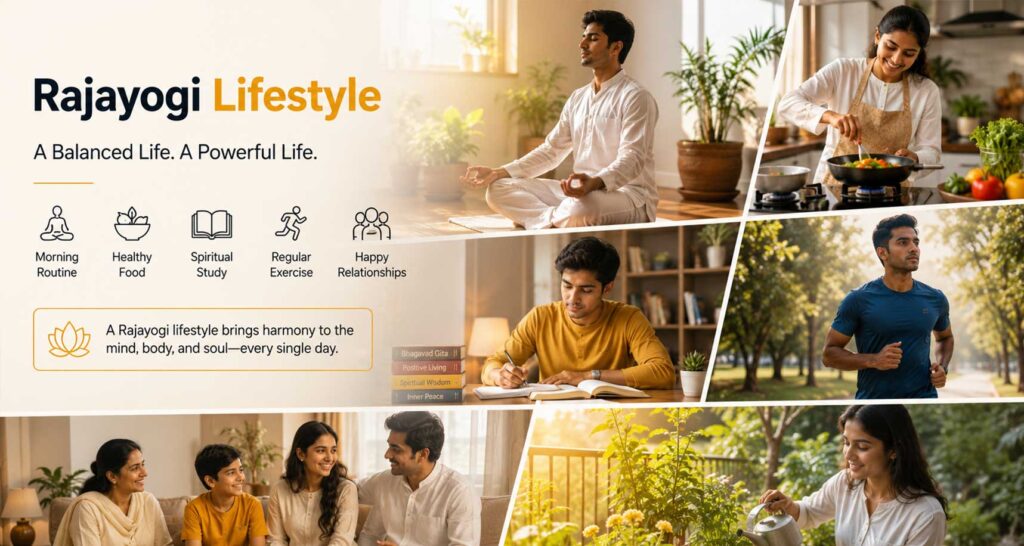
The Rajayogi Lifestyle: Beyond Meditation
The Brahma Kumaris emphasize that sustainable transformation comes through a complete spiritual lifestyle.
A Rajayogi lifestyle includes:
Early Morning Meditation
Starting the day with spiritual energy and inner peace.
Satvik Diet
Pure vegetarian food prepared in a peaceful state of mind.
Daily Spiritual Study
Nourishing the intellect with elevated thoughts.

Positive Company
Choosing uplifting relationships, spiritual gatherings, meditation centres, and supportive environments that encourage positive choices and healthy living.
Thought Management
Regular awareness of thoughts and emotions.
Soul Consciousness
Remembering:
“I am a peaceful, pure, and powerful soul. I am a master of my mind, not a slave to my habits.”
Raja Yoga teaches that peace, purity, love, and happiness are the soul’s original qualities, and these qualities can be restored through spiritual awareness and connection with the Supreme.
Meditation Before Sleep
Ending the day with gratitude, peace, and spiritual remembrance.
These practices gradually rebuild confidence, self-respect, and emotional strength.
The Power of Spiritual Environment
Recovery becomes easier when individuals are surrounded by positive influences and supportive relationships.
The Brahma Kumaris emphasize the importance of spiritual environment in personal transformation. Positive company, meditation gatherings, spiritual study, value-based discussions, and uplifting relationships help individuals strengthen their determination and maintain healthy choices.
Just as negative environments can reinforce addiction, positive spiritual environments can accelerate recovery and personal growth.
A person may begin the journey alone, but transformation becomes more sustainable when supported by family, community, and a culture of positivity.
Spiritual companionship reminds individuals that they are not defined by their past mistakes. Every soul has the capacity to change, heal, and move forward.
Families and Society Must Work Together
Recovery is not an individual responsibility alone.
Families, schools, communities, healthcare institutions, governments, and spiritual organisations all have an important role to play.
Young people need:
- Emotional support
- Positive role models
- Value-based education
- Healthy coping skills
- Meditation and self-awareness practices
Compassion often achieves what criticism cannot.
A Personal Pledge for 26 June 2026
On this International Day Against Drug Abuse and Illicit Trafficking, take a simple pledge:
- I will choose awareness over ignorance.
- I will support those struggling with addiction.
- I will strengthen my mind through meditation.
- I will promote healthy and positive lifestyles.
- I will contribute toward building a drug-free society.
Spend a few moments in silence and affirm:
“I am a powerful soul. My peace is stronger than any addiction. My future is brighter than my past.”
Toward a Drug-Free and Spiritually Empowered Society
A drug-free society cannot be built through punishment alone.
It requires:
- Prevention
- Education
- Rehabilitation
- Emotional healing
- Family support
- Community participation
- Spiritual empowerment
When individuals discover inner peace, external addictions lose their grip.
The real solution lies not only in removing substances from society but in restoring strength within the human mind.
This International Day Against Drug Abuse and Illicit Trafficking 2026, let us work together to build a future where every individual discovers self-respect, inner peace, and lasting freedom.
Choose Self-Respect. Choose Spiritual Power. Choose Inner Freedom Through Raja Yoga Meditation.
Lasting freedom from addiction is not achieved through fear, punishment, or willpower alone. It emerges when individuals rediscover their original spiritual identity and experience the empowering relationship between the soul and the Supreme Soul.
When inner peace becomes stronger than inner pain, recovery becomes possible.
When spiritual power becomes stronger than temptation, transformation becomes natural.
download Service Materials
Banners
PPT
Song